

Measuring Impact
Transparently
Your Virtual Cold Chain Assistant aims to mitigate post-harvest loss in the horticultural value chain, a leading cause of widespread poverty among smallholder farmers. We collaborate with local cooling companies and farmers organisations under the Cooling-as-a-Service business model to make solar-powered cold storage facilities economically and geographically accessible.

PRESENCE
11 cooling
companies
companies
42 cold rooms
334 MT cold room
capacity
capacity
41 locations
BENEFICIARIES
654 cooling users benefitting,
of which 27% are women
of which 27% are women
2877 indirect beneficiaries
5537 informed farmers,
of which 42.5% are women
STORAGE
573.5 TONS of fruits and vegetables stored in cold rooms
28725 crates checked in
Irish Potato, Beans, Apple, Carrot, Bell Pepper are among the top most crops stored in cold rooms using Coldtivate




ENVIRONMENT
822 TONS Co2e emissions avoided per year from diesel generator removal
278 TONS Co2e emissions avoided per year from avoided crop spoilage
POST-HARVEST LOSS
-61.8%reduction in
postharvest loss
postharvest loss
From 9.10%to 3.50%
FARMERS' REVENUE
+43,7%increase in earnings
from crop sales
from crop sales
From $10.24to$14.73
Weekly follow-up surveys track revenue growth from a baseline.
FINANCE
$4.63 milfinance mobilised
Last Updated: 01/06/2026
HOW DATA DRIVES INVESTMENTS IN SUSTAINABLE COOLING SOLUTIONS
Cooling companies offering decentralised cold storage solutions often face difficulties in attracting investments due to the lack of reliable data showing the viability of their business. By digitalising cold room operations, they are now able to better showcase their business performance and credit worthiness. Similarly, smallholder farmers using cold storage can use their storage history to provide a track record of successful payments to unlock lending and microcredit opportunities.
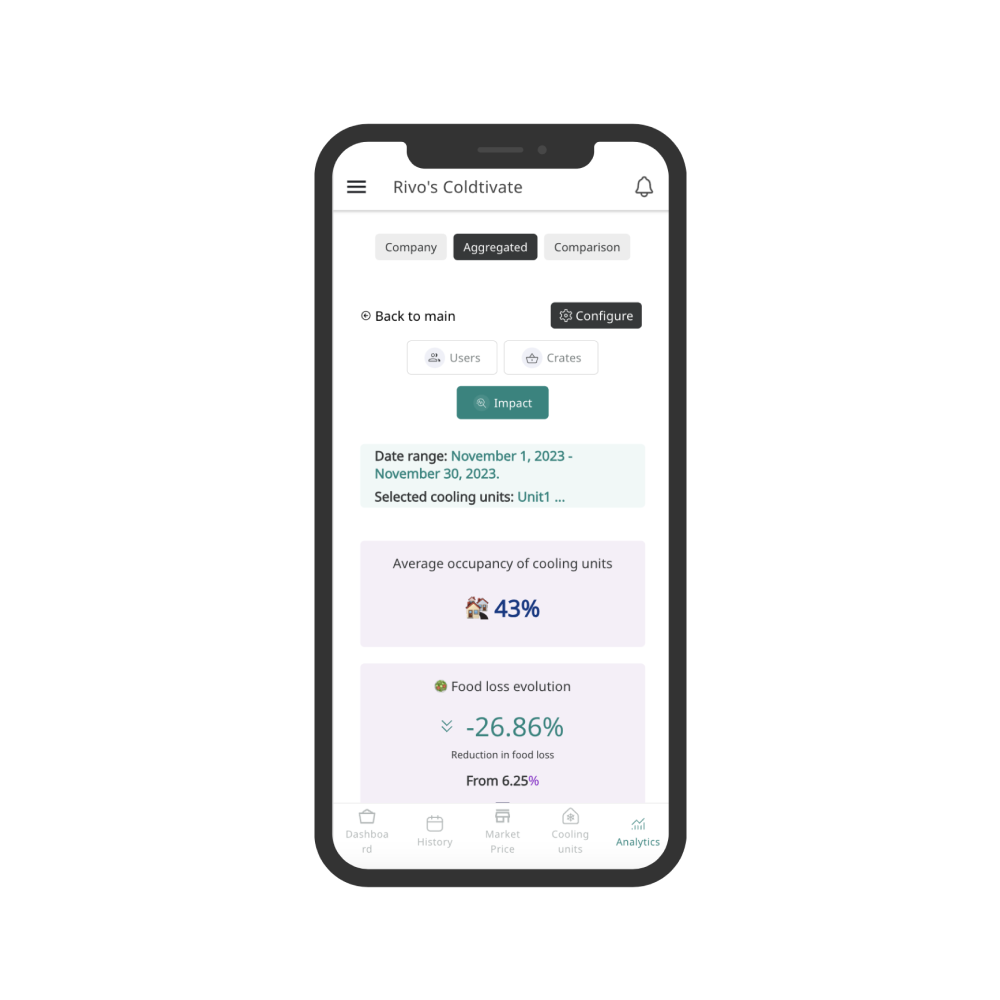
COLDTIVATE IMPACT DASHBOARDS
Coldtivate Impact Dashboards allow cooling companies to track and compare room performance, monitor the impact of their intervention, and showcase the viability of their business. Coldtivate Analytics tab includes information about the evolution of post-harvest losses and farmers' revenue, based on user survey data, and environmental metrics on the CO2 emissions saved. All data is exportable, and cooling users can see similar statistics to better understand the impact of cooling on their crop spoilage and revenue rates. Cold room operators and managers can also export Excel-based summaries of all checked-in and checked-out crates, which facilitate cold room cashflow monitoring.
CONSORTIUM
Funders:

Implementers:


Join us!
Join us!
Join us!
Join us!
Join us!
Join us!
Join us!
Join us!
Join us!
Join us!
Join us!
Join us!
Join us!
Join us!
Join us!
Join us!
Join us!
Join us!
Join us!
Join us!
Join us!
Join us!
Join us!
Join us!
Join us!
Join us!
Join us!
Join us!
Join us!
Join us!
Join us!
Join us!
Join us!
Join us!
Join us!
Join us!
Join us!
Join us!
Join us!
Join us!
Join us!
Join us!
Join us!
Join us!
Join us!
Join us!
Join us!
Join us!
Join us!
Join us!
Join us!
Join us!
Join us!
Join us!
Join us!
Join us!
Join us!
Join us!
Join us!
Join us!
Join us!
Join us!
Join us!
Join us!
Join us!
Join us!
Join us!
Join us!
Join us!
Join us!
Join us!
Join us!
Join us!
Join us!
Join us!
Join us!
Join us!
Join us!
Join us!
Join us!
Join us!
Join us!
Join us!
Join us!
Join us!
Join us!
Join us!
Join us!
Join us!
Join us!
Join us!
Join us!
Join us!
Join us!
Join us!
Join us!
Join us!
Join us!
Join us!
Join us!
Join us!
Join us!
Join us!
Join us!
Join us!
Join us!
Join us!
Join us!
Join us!
Join us!
Join us!
Join us!
Join us!
Join us!
Join us!
Join us!